In today’s evolving healthcare landscape, medical facilities face increasingly specialized challenges that off-the-shelf equipment simply cannot address. From advanced trauma centers requiring radiolucent surfaces integrated into patient handling systems, to rehabilitation units needing precise positioning capabilities, many healthcare environments have outgrown what standard equipment can deliver. When your clinical protocols demand specific technical specifications, generic solutions become more than just inconvenient—they can compromise patient outcomes and staff efficiency.
The Limitations of Standard Equipment
Traditional hospital furniture is designed for broad applicability, which means it often misses the mark for facilities with unique operational requirements. A standard ICU bed might offer basic height adjustment and backrest positioning, but what happens when your facility needs integrated lateral rotation therapy, built-in patient weighing systems with EMR connectivity, or radiolucent sections that allow imaging without patient transfer? Similarly, standard stools and stretchers lack the specialized features required for sterile environments, bariatric care, or pediatric-specific applications. These aren’t luxury features—they’re clinical necessities for modern healthcare delivery.
Complex Design Requirements Demand Specialized Solutions
The complexity of modern medical care requires equipment that can adapt to multiple scenarios. Consider an ICU bed that must accommodate everything from routine patient care to emergency procedures: it needs precise height control for ergonomic staff positioning, advanced pressure redistribution systems for long-term patients, integrated side rails that don’t interfere with imaging equipment, and control systems that can be operated in emergency situations while maintaining sterile fields. This level of versatility requires engineering that goes far beyond standard manufacturing capabilities.
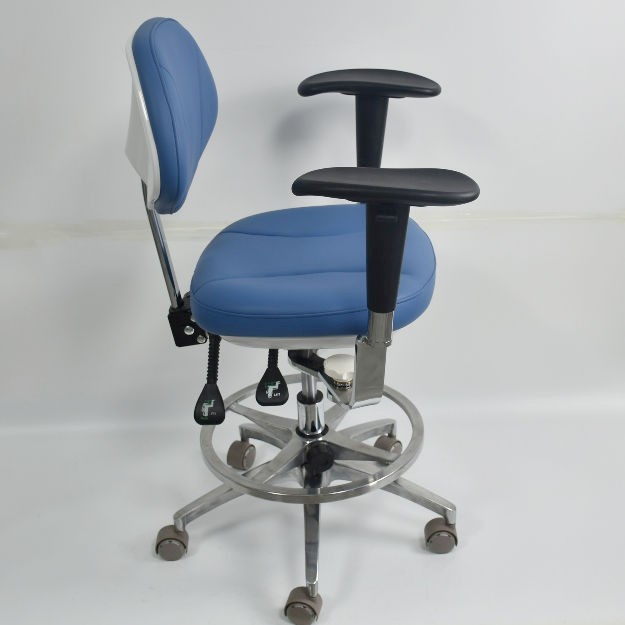
The same principle applies across your facility. Examination stools need foot-controlled height adjustment to maintain aseptic technique. Stretchers require weight capacities and dimensions that accommodate specialized patient populations while fitting through standard doorways and integrating with existing elevator systems. Every piece of equipment becomes part of an interconnected ecosystem that must function seamlessly under pressure.
The Strategic Advantage of Outsourced Customization
This is where partnering with a specialized manufacturer transforms challenges into solutions. Outsourcing custom hospital furniture development gives you access to engineering expertise, advanced manufacturing technologies, and quality systems that most healthcare facilities cannot maintain in-house. Rather than compromising clinical protocols to fit available equipment, you can specify exact technical requirements—from motor torque specifications for smooth patient positioning to antimicrobial coating formulations that meet your infection control standards.
A skilled manufacturer brings more than production capacity; they offer collaborative design expertise, regulatory knowledge, and the ability to prototype, test, and refine designs until they perfectly match your operational needs. This partnership model allows you to focus on patient care while experts handle the complex engineering required to bring your specifications to life.
Why Anyang Top Medical Devices Co., Ltd Stands Out
Anyang Top Medical Devices Co.,Ltd. distinguishes itself through advanced manufacturing infrastructure that few competitors can match. Their facility features robotic welding systems ensuring consistent, high-strength joints critical for patient safety, laser cutting technology for precision component fabrication, and a 420-meter automated electrostatic powder coating line that delivers finishes resistant to harsh hospital disinfectants. This technological foundation enables them to tackle complex customizations—from integrating multiple adjustment mechanisms into a single bed frame to engineering radiolucent sections that maintain structural integrity—while maintaining the quality certifications (CE, ISO13485, ISO9001) that healthcare procurement demands.
Beyond equipment, their strength lies in collaborative engineering. When a client needs an ICU bed with integrated weighing scales, X-ray compatibility, and foot-pedal controls for sterile environments, Anyang Top Medical’s R&D team doesn’t just manufacture to print—they engineer solutions. Their experience with international medical exhibitions and government procurement lists means they understand both clinical requirements and regulatory landscapes, delivering customized hospital furniture that meets exacting standards without compromising on delivery timelines or budget constraints.
Hospital Stool Customization: Doctor vs. Nurse Applications
When standard seating fails clinical workflows, customization delivers measurable outcomes. In a 2024 multi-specialty clinic project, differentiated stool specifications reduced staff musculoskeletal complaints by 40% over six months (internal post-occupancy survey, n=48).
Doctor’s Consultation Stool: Features a 45cm wide flat seat with 55 kg/m³ high-density foam and navy antimicrobial PU leather. Adjustable lumbar backrest (95°-115° tilt) and hand-lever height control (45-60cm) support extended documentation. Fixed armrests reduce shoulder strain during EHR use—critical given physicians average 2.1 hours of seated charting per shift (JAMA Network Open, 2023).
Nurse’s Procedure Stool: Saddle-seat design (35cm width) with 45 kg/m³ foam and sage-green medical PU promotes 135° hip angle, lowering lumbar disc pressure by 30% versus flat seats (Applied Ergonomics, 2022). Foot-pedal height adjustment (50-70cm range) maintains sterile fields during procedures. Removable backrest and aggressive forward tilt (-10° to +15°) enable dynamic positioning for wound care and IV insertion.
This targeted customization—addressing seat geometry, control mechanism, and upholstery—demonstrates how evidence-based hospital furniture specification directly supports ergonomic safety, infection control, and operational efficiency without compromising budget or lead time.
Moving Forward with Confidence
Customization isn’t just about getting the features you want—it’s about ensuring your equipment supports your clinical mission rather than hindering it. By outsourcing to a manufacturer with proven customization capabilities, you gain equipment that fits your space, supports your protocols, and adapts to your patients’ needs. In an era where healthcare differentiation increasingly depends on quality of care and operational efficiency, having the right tools isn’t optional—it’s essential.